
Arrest Records in Grady County
The Grady County Sheriff’s Office, Cairo Police Department, Whigham Police Department, Georgia State Patrol, GBI, and federal agencies can make arrests within their authority. Custodial arrests generally reach Grady County Jail, but the agency that investigated or arrested the person keeps its own incident or arrest report. The jail’s entry proves that intake occurred. It does not establish guilt or necessarily show the charge later filed by a prosecutor.
A complete arrest trail may involve five custodians. The arresting agency holds the narrative. The jail holds booking and current custody data. Magistrate or another court holds first-appearance, warrant, and bond records. The prosecutor chooses the formal counts, and the clerk keeps the case docket. GCIC later associates fingerprint-supported arrest and reported disposition data with Georgia criminal history. One record cannot stand in for all five.
The official Grady County Sheriff’s Office site is the starting point for Sheriff contacts.

The Sheriff page identifies the local agency, but it does not provide a verified public booking search.
Call Grady Jail for Bookings
No official web inmate roster or booking blotter was located for Grady County, Georgia. Search results for Grady County, Oklahoma are a common wrong turn and should be rejected. For a recent local booking, call 229-377-5200. Ask for current custody, booking number, booking date, initial charge, bond, and issuing court. The state-maintained jail card lists 250 North Broad Street in Cairo, while local directory materials also identify the Sheriff office at 115 16th Avenue NE. Confirm the detention entrance before traveling.
Grady County Sheriff and Jail
Sheriff records: 115 16th Avenue NE
Cairo, GA 39828
Mail: P.O. Box 690
229-377-5200
sheriff@gradycountyga.gov
Fax: 229-377-1339
Check the official GDC Grady County Jail location card before a visit.
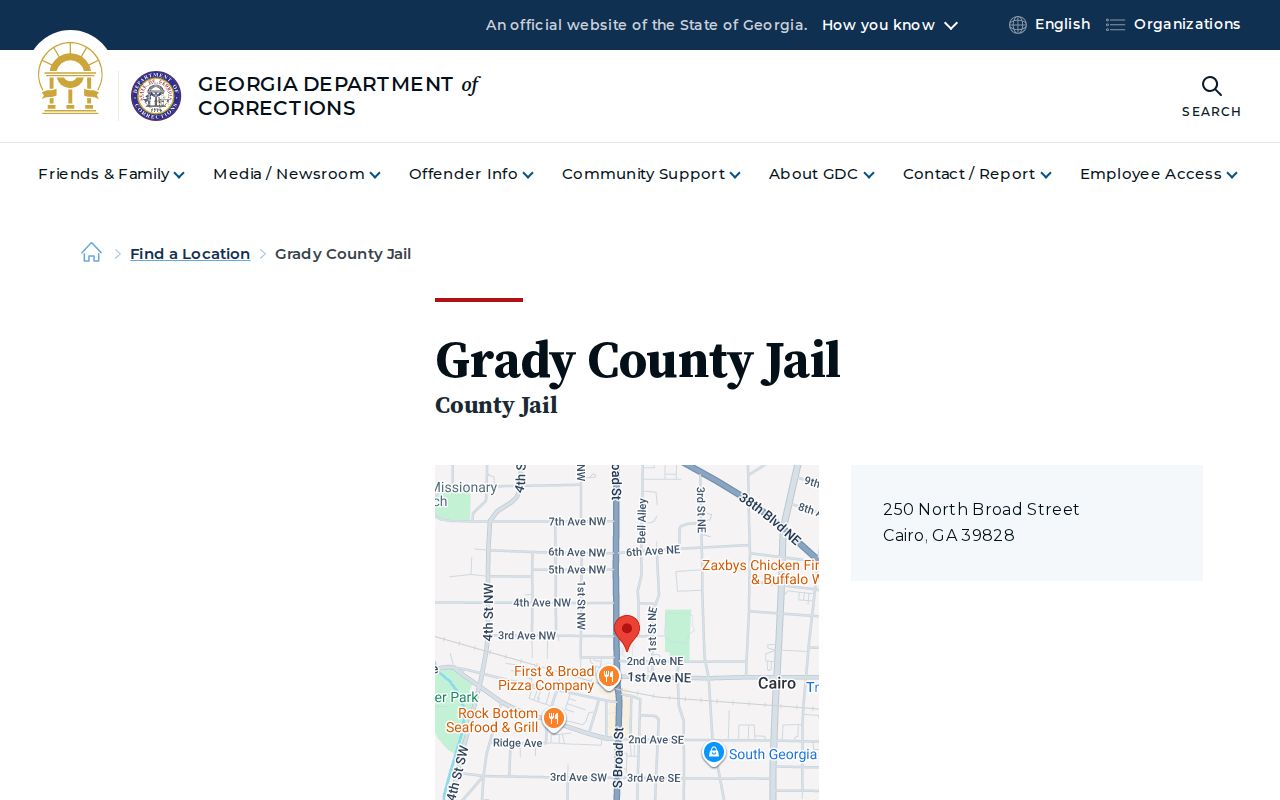
The official card supports the jail phone and location, yet a caller should still verify the current entrance and release procedure.
Grady County Arrest Lookups
Start with a name, approximate date, place, and likely arresting agency. Those facts determine where to ask. Phone access is vital because Grady publishes no official roster. A Georgia Open Records Act request can seek an existing nonexempt report, but the request should go to the agency that created it. The agency may redact protected material and charge lawful search or copy costs.
- Call Grady County Jail at 229-377-5200 for current custody and booking identifiers.
- Request the incident or arrest report from the arresting agency. Use Cairo or Whigham police for their arrests, not the Sheriff by default.
- Call the Grady clerk at 229-377-2912 to match the arrest to a filed case, allowing for delay after a recent or weekend arrest.
- For one’s own fuller Georgia history, use GCIC inspection through authorized local law enforcement; Georgia Felon Search is only a name-based final-felony product.
- Use a written Georgia Open Records Act request when an online or phone inquiry does not supply an existing public report.
- Check the appropriate city court for ordinance or traffic matters and GDC after transfer to state custody.
No verified Grady Sheriff, Cairo Police, or Whigham Police mobile app was found. Do not substitute an unofficial mugshot site or people-search product for these official channels.
Route Grady Arrest Reports Correctly
A jail record and an arrest narrative are separate products. The Sheriff can usually address a Sheriff arrest and the local booking, but it may hold only the booking when Cairo Police, Whigham Police, a state trooper, GBI, or a federal agent made the arrest. Ask the investigating agency for its narrative, evidence inventory, or related public report.
| Arresting agency | Report route | Booking route |
|---|---|---|
| Grady County Sheriff | 229-377-5200; P.O. Box 690; fax 229-377-1339 | Grady County Jail |
| Cairo Police | Official Cairo police records or open-record channel | Usually Grady Jail; verify citations |
| Whigham Police | 108 W. Broad Ave.; 229-762-3366; weekdays 8-5 | Grady Jail; verify with police |
| Georgia State Patrol | Responsible post or Georgia DPS open-record channel | Grady Jail when booked locally |
| GBI or federal agency | Investigating agency | Local, state, or federal facility as applicable |
Give the custodian enough detail to locate an existing record. An agency is not required to conduct research or create a custom report.
Arrest Records: What They Contain
An incident report may state the incident number, arrest time and place, agency and officer, warrant or warrantless basis, initial statutes, narrative facts, people, property, evidence, and transport destination. Redactions may protect an active investigation, victim, juvenile, medical detail, or security-sensitive fact. Booking adds the intake identifiers and custody fields shown below.
| Booking number | Jail identifier used to distinguish one intake from another. |
|---|---|
| Booking date and time | Shows when jail intake occurred, not when the court resolved the case. |
| Arresting agency | Points to the office that normally holds the incident or arrest narrative. |
| Initial charges | Allegations recorded at intake; filed counts may later change. |
| Bond and holds | May identify bond by count, another hold, or a judicial restriction. |
| Booking image | Created at intake; no official Grady mugshot gallery was found, and release remains subject to law. |
| Custody status | May show housing, release, or transfer rather than the court outcome. |
The court file adds the filed charge, case number, hearings, disposition, and sentence. Read both when the outcome matters.
Inside a Grady Jail Booking
At intake, jail staff establish identity, inventory property, record the agency and charge, take a photograph and fingerprints, screen medical and security needs, and assign housing. A judicial officer then addresses probable cause, rights, counsel, and bond at the legally required early appearance. Bond may be secured or surety, cash when ordered, recognizance, or denied or limited under the law and the judge’s findings.
Record flow: Arresting Agency › Grady Jail Booking › First Appearance › Prosecutor Review › Clerk’s Case File › GCIC Disposition Update
Exact local bond-payment methods and release-lobby procedures were not published. Call before bringing funds. The jail states that it processes more than 2,000 people each year, which describes intake volume, not convictions. Sheriff employees may not recommend a bondsman.
Recent Grady County Bookings
Grady County has no verified official online booking log. The reliable fallback is direct contact with the jail, then the arresting agency and clerk. Ask the jail about current custody and booking identifiers. Ask the agency for the report. Ask the clerk whether formal charges have reached the docket. Fresh arrests can take time to appear in a court file, particularly after a weekend.
Do not treat unofficial galleries as the county blotter. No official Grady mugshot gallery was located. A booking image is not proof of guilt, and republishing arrest photos without the full case outcome can create a false impression.
Find Transfers in GDC
Once a person enters Georgia state correctional custody, switch from the county jail phone to GDC Find an Offender. The locator accepts search routes based on name, description, GDC or EF identification, and case number. GDC suggests trying the first four letters of a surname and selecting all offenders when a strict active search fails. Cookies and disclaimer acceptance are required.
View the official GDC locator gateway and warning.
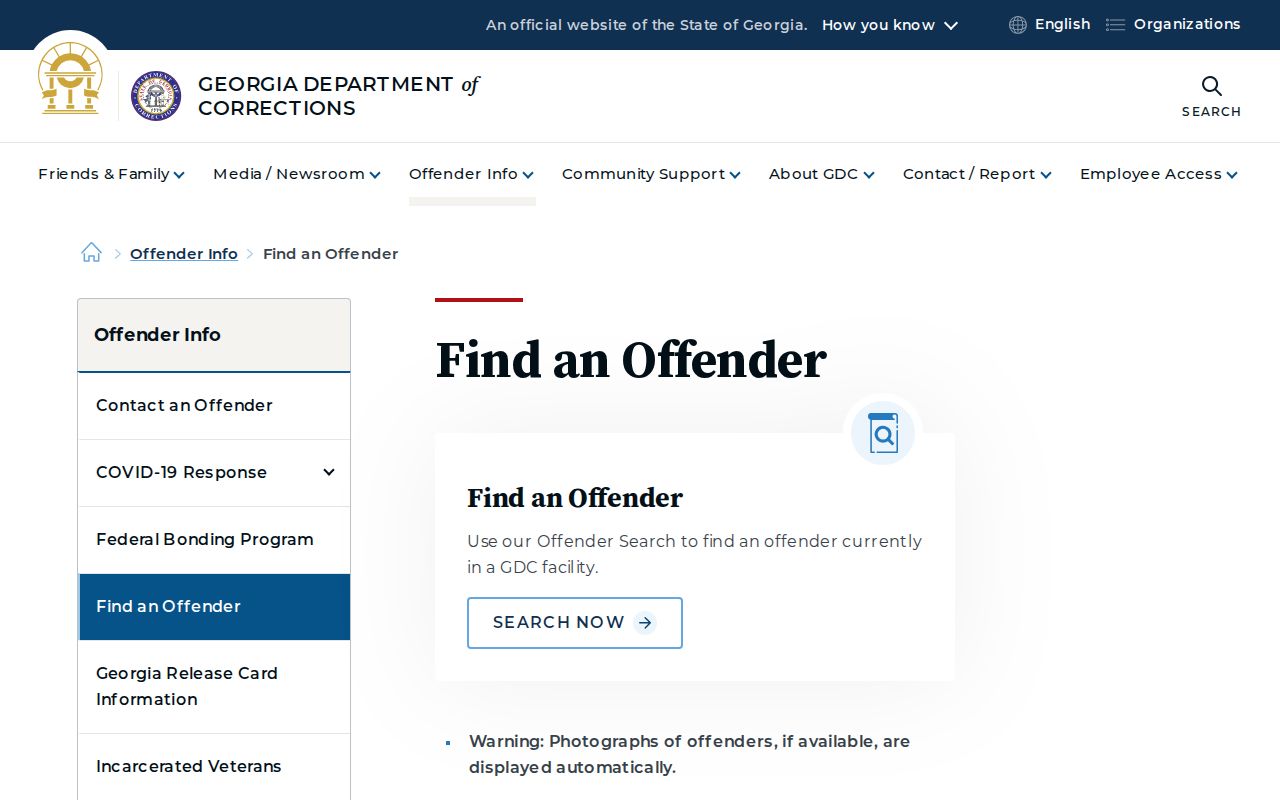
Public GDC results can include identity, physical description, county of conviction, crime, sentence, prior GDC incarceration, location, release information, and a photo when available. Medical details, juvenile crimes, protected victim data, and family addresses are withheld. GDC also warns that county-jail results do not carry the same detailed facility sheets as state facilities.
A federal transfer uses a different locator. Open the Bureau of Prisons Inmate Locator for federal custody and historic federal inmate records.
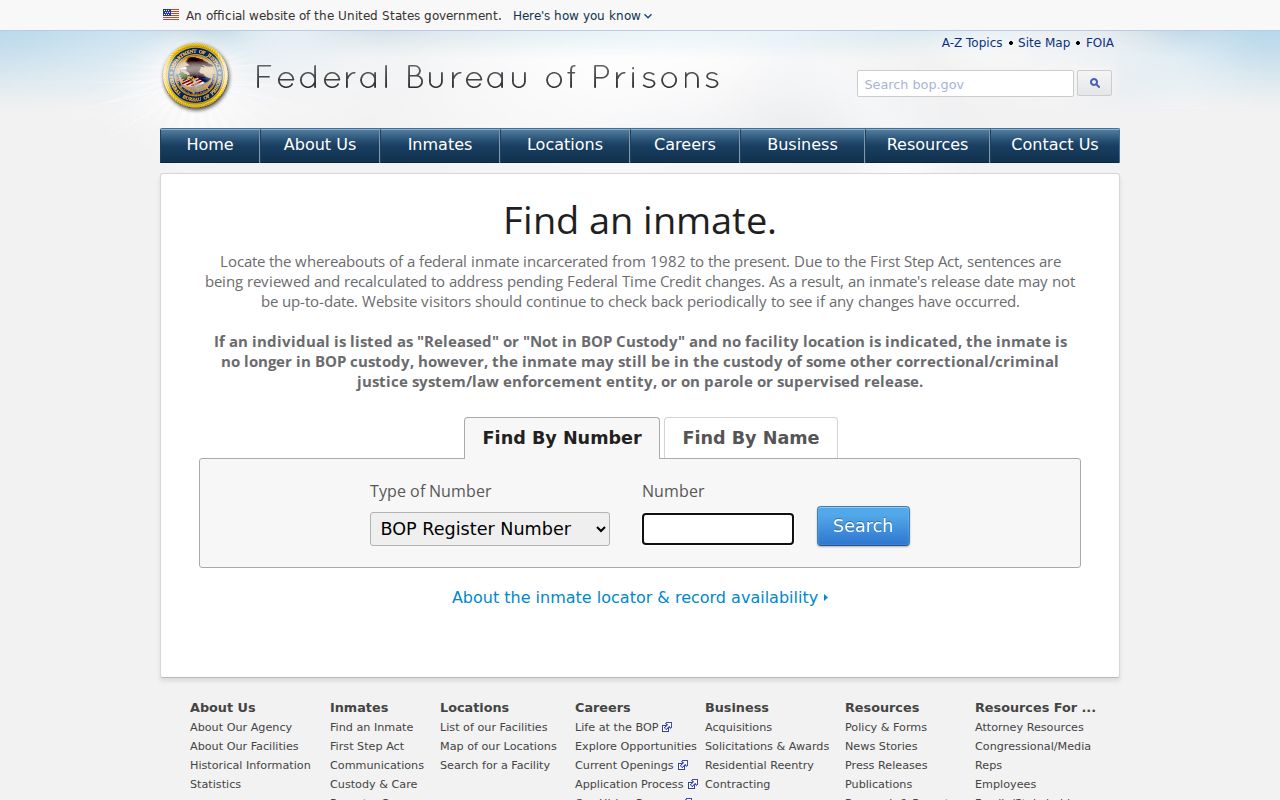
The BOP search does not cover Grady County Jail or Georgia Department of Corrections custody.
From Fingerprints to GCIC
Grady Jail takes fingerprints during custodial intake and transmits fingerprint-supported arrest data through Georgia criminal-justice systems. GCIC maintains the statewide repository. Courts, prosecutors, and other criminal-justice agencies later report dispositions. That later reporting is why a statewide history and a fresh local booking may not match at once.
Georgia Felon Search is not a full rap sheet. It is a paid, name-based public search for Georgia final felony convictions and omits misdemeanors, juvenile felony history, and sealed or restricted records. For one’s own fuller record, use GCIC inspection through an authorized local law-enforcement channel or the official fingerprint process when applicable. If a disposition is missing, obtain the signed order from the Grady clerk and follow GCIC’s correction procedure.
- Arrest cycle
- The connected arrest, charge, and disposition information tied to an event.
- Disposition
- The reported current or final outcome of a charge.
- Record restriction
- Georgia’s process for limiting eligible arrest-cycle information from public or noncriminal-justice dissemination; it does not destroy every record.
Arrest Records vs Conviction Records
An arrest record documents an allegation and custody event. A conviction record reflects a guilty judgment after a plea or trial. Different offices create them, and they can end differently. Always read the final court disposition before describing the outcome.
| Arrest record | Conviction record |
|---|---|
| Created by the arresting agency and jail | Created through the court’s judgment |
| Shows that an arrest or booking occurred | Shows a finding of guilt |
| Held in agency reports and booking systems | Held by the clerk and reported to GCIC |
| May lead to release, no filing, dismissal, or acquittal | May lead to sentence, appeal, or later eligible sealing relief |
Note: An arrest is not proof of guilt. Charges can change, never be filed, or end in dismissal or acquittal.
Georgia record restriction may limit eligible arrest-cycle data. For arrests before July 1, 2013, the legacy route begins with the arresting agency. For later arrests, the appropriate prosecutor is the usual starting point. A missing online result alone does not prove that a record has been restricted.