
Grady County Criminal History Checks
Grady County has no single public screen that combines arrests, court files, state histories, correctional custody, and registry data. Start by deciding what fact must be confirmed. The Clerk of Superior Court is the main source for felony case files and final dispositions. State Court handles misdemeanor and traffic prosecutions. The Sheriff and jail can confirm a recent booking, while the agency that made the arrest keeps its own incident narrative. A statewide GCIC product serves a different purpose: it connects reported Georgia events to an identity, but it is not a substitute for reading the local case.
Use a full legal name, approximate event year, and case or booking number when known. Date of birth helps distinguish people with similar names, though a public copy may hide the full date. Prior surnames and spelling variants can matter. For a result that will be relied on, compare the initial charge with the prosecutor's filed charge and obtain the court's final disposition.
- Call the Grady Clerk at 229-377-2912 for Superior and State Court records.
- Call the jail at 229-377-5200 for recent custody, booking number, bond, and issuing court.
- Request the narrative from the Sheriff, Cairo Police, Whigham Police, or other arresting agency.
- Use GDC only after a transfer to state custody, and use the GBI registry only for registration status.
- For personal review, obtain a GCIC history and compare each cycle with a certified Grady disposition.
Grady County's Broad Street Hub
Cairo is the county seat, and many Grady County criminal record paths converge near the courthouse. The official Grady County government gateway leads to court and county office information. The courthouse at 250 North Broad Street houses the clerk-facing court functions, and the jail is listed at the same street address in state materials. Shared geography does not mean shared custody. The Clerk controls case dockets and filed papers. Jail staff control booking and custody data. A person requesting both must ask each office for its own product.
The county's court directory lists the Clerk at 229-377-2912, weekdays from 8:00 a.m. to 5:00 p.m. State Court uses 229-762-4000, while Magistrate Court uses 229-377-4132. Calling first can establish whether an older file is paper or off-site, whether remote copies are offered, and what copy or certification charge currently applies.
The official county gateway offers the best orientation to Grady public offices.

Its office links help route a criminal history question to the clerk, sheriff, or another actual custodian.
Official Background Checks in Georgia
The Georgia Bureau of Investigation's Georgia Crime Information Center, or GCIC, is the state repository. GBI explains in its criminal history record FAQ that most sheriffs and police departments can provide a person with a Georgia history, subject to each agency's current identification, procedure, and fee rules. In Grady County, ask the Sheriff or a city police department whether the result will be a statewide GCIC history or only a local agency check. No local fee or fingerprint procedure was published in the reviewed county material.
Georgia Felon Search is the public name-based state product for final felony convictions. It requires first and last name, date of birth, sex, a reason for the search, payment, and an email address. The published charge is $15 even when no record is returned. Opening more than one possible match can create another charge for each record. It excludes misdemeanors, pending matters, juvenile felony histories, and restricted records. Fingerprints remain the sound way to confirm identity.
The GBI FAQ screen shows how the state separates official history products from ordinary county files.
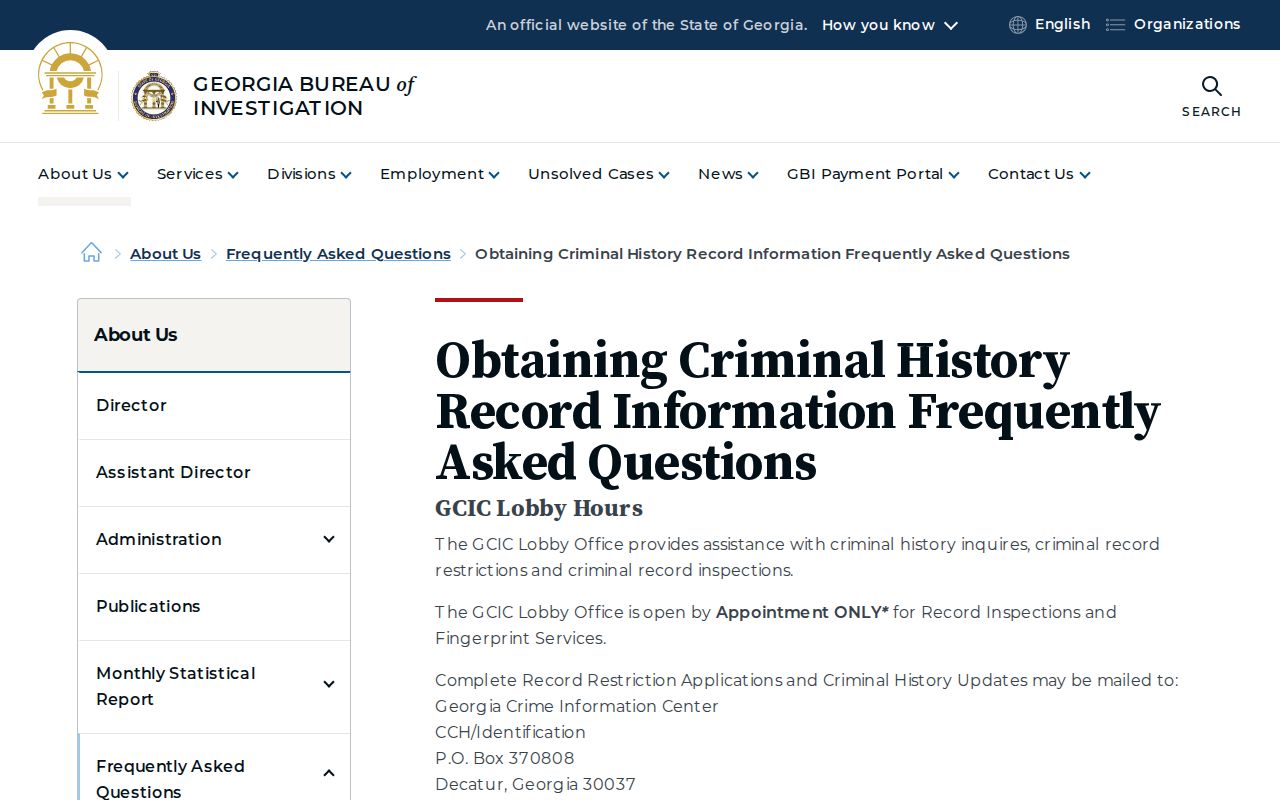
That distinction matters when a name search and a Grady court disposition appear to conflict.
| Official product | Coverage | Published cost |
|---|---|---|
| Georgia Felon Search | Final Georgia felony convictions by demographic search | $15 per result opened, including no-record result |
| GAPS/IdentoGO Georgia check | Authorized fingerprint program with registration code | $39.99 on the cited schedule |
| GAPS/IdentoGO Georgia and FBI | Authorized state and federal fingerprint check | $51.99 on the cited schedule |
| Grady certified disposition | One county court case | Confirm with the Clerk |
No One-Stop Grady Record Search
A search can fail when it is sent to the wrong layer. PeachCourt is the e-access route identified for Grady Superior and State Court, but it requires an account and does not justify a promise that every old document is online or free. The jail has no verified official public roster. GDC Find an Offender is not a current county jail list. Georgia Felon Search does not return misdemeanors or pending allegations. The registry answers only whether a person has a Georgia registration duty.
A useful access map is: arresting agency for the narrative; Grady jail for booking and custody; Clerk for the filed criminal case; GCIC for identity-linked Georgia history; GDC for state custody; DCS for felony community supervision; and the GBI registry for sex offender data. If a webpage has no result, use the phone, counter, or written Georgia Open Records Act channel documented for that custodian. Absence from one system never clears every other layer.
Search trap: Results for Grady County, Oklahoma often appear online. Georgia contacts use Cairo addresses and area code 229.
Kinds of Criminal Records
Each Grady County criminal record begins at a different point. The arresting officer creates an incident or arrest narrative. Jail intake creates a booking entry, fingerprints, photograph, property record, bond fields, and custody status. A judge may create warrant, first-appearance, or bond records. The prosecutor then selects the formal charge, and the clerk maintains the docket, accusation or indictment, hearing entries, disposition, and sentence. GCIC later links reported events to a state history.
- Incident and arrest report: the arresting agency's account, subject to lawful redaction.
- Booking record: intake, initial charge, bond, hold, release, or transfer data from Grady Jail.
- Court file: filed charge, events, outcome, sentence, costs, and public documents held by the Clerk.
- Warrant record: a court-issued order whose availability depends on service, sealing, and case status.
- Correctional record: GDC custody data or DCS supervision information, with protected details withheld.
Probate Court is not the usual criminal-file destination. Superior Court hears felonies; State Court handles misdemeanors and traffic cases; Magistrate Court performs warrant and early-case functions; city courts handle matters within municipal jurisdiction.
Finding Grady Jail Transfers
For a recent arrest, call Grady County Jail at 229-377-5200. Ask for current custody, booking number, booking date, initial charge, bond, and issuing court. There is no verified official Grady County, Georgia online inmate roster. If jail staff say the person was transferred after a state sentence, move to GDC Find an Offender. Search by name, description, GDC or EF identifier, or case number. GDC suggests trying the first four surname letters and selecting all offenders if a strict active search produces no hit.
A GDC profile can show identity and physical description, county of conviction, crime, sentence, prior state incarceration, location, and release eligibility. It does not reproduce the full Grady court file, and GDC warns that county-jail entries lack the detailed information sheets used for state institutions. Successfully completed First Offender matters are not published. For the judgment behind a transfer, return to the Clerk.
Note: Jail staff should confirm current bond and release instructions before anyone brings funds to the facility.
Grady County Criminal Records: What They Contain
A record's fields reveal its source. GCIC identifies a person through data such as name, date of birth, sex, race, height, and weight, then associates fingerprint-supported arrests, reported charges, dispositions, and Georgia correctional custody. Public copies should not expose every sensitive identifier. A court file instead centers the case number, court, parties, charging paper, docket events, bond, judgment, sentence, and costs. Booking data centers intake time, arresting agency, initial allegations, photograph, holds, and release or transfer.
| Name and identifiers | Used to distinguish the subject; full sensitive values may be redacted. |
|---|---|
| Arrest and booking | Agency, date, intake number, preliminary charges, bond, holds, custody, and release. |
| Charges and statutes | Alleged offenses at arrest and later accusation or indictment counts. |
| Disposition | The current or final result, such as dismissal, plea, acquittal, or conviction. |
| Sentence | Confinement, probation, fines, restitution, and concurrent or consecutive terms. |
| Supervision status | Public court or correctional information, not protected case notes or treatment data. |
- Accusation
- A prosecutor-filed charging document used for misdemeanors and permitted felonies.
- Indictment
- A formal felony charge returned by a grand jury.
- Disposition
- The current or final reported outcome for a charge.
- Dead docket
- An inactive case placement, not an acquittal or final dismissal.
Grady County Warrant Verification
No official public Grady active-warrant list was found. Call the Sheriff's Office at 229-377-5200 and ask for the warrant clerk or GCIC TAC. A missing web result is not proof that no warrant exists. Magistrate, Superior, State, Cairo Municipal, and Whigham Recorder's Court matters can follow different paths, and an unserved or sealed warrant may not be disclosed.
For magistrate-issued matters, call 229-377-4132. The Clerk at 229-377-2912 can address Superior Court files, and State Court uses 229-762-4000. Executed or closed warrant records may be requested under the Open Records Act, while active-investigation and sealed material can remain protected. Someone resolving a possible warrant should confirm the issuing court, case number, bond or appearance directions, and current surrender instructions. Never send money to an unsolicited caller who claims a warrant exists.
Georgia Public Access Laws
The Georgia Open Records Act presumes that agency records are open unless an exemption applies. It provides a route to existing releasable records, but it does not force an office to create a report or answer research questions. Send a narrow request to the actual custodian with the record type, date range, location, agency, person, known incident or case number, desired format, and a fee ceiling. Active investigations, juvenile material, victim information, medical data, Social Security numbers, and security details may be withheld or redacted.
Key Georgia laws:
O.C.G.A. §§ 50-18-70 through 77 create the public-record request framework.
O.C.G.A. §§ 35-3-34 and 35-3-35 govern GCIC dissemination.
O.C.G.A. § 35-3-37 controls eligible record restriction.
O.C.G.A. § 42-1-12 supplies the registry framework.
Grady Supervision Records Split
Georgia's Department of Community Supervision supervises adult felony probationers and parolees, while the State Board of Pardons and Paroles makes parole decisions. The DCS Cairo Field Office at 240 2nd Avenue SE serves Grady and the wider South Georgia Circuit. Its number is 229-377-5347, and published weekday hours are 8:00 a.m. to 4:30 p.m. The parole field roster lists 229-378-2554 at the same address.
There is no identified public probationer name search. Read the Grady sentencing order, check GDC for correctional information, then call DCS when a public supervision fact needs confirmation. The court docket may show a revocation petition, warrant, hearing, and outcome, but treatment information and detailed supervision notes should not be expected as public records.
The Georgia DCS gateway identifies the agency responsible for felony community supervision.
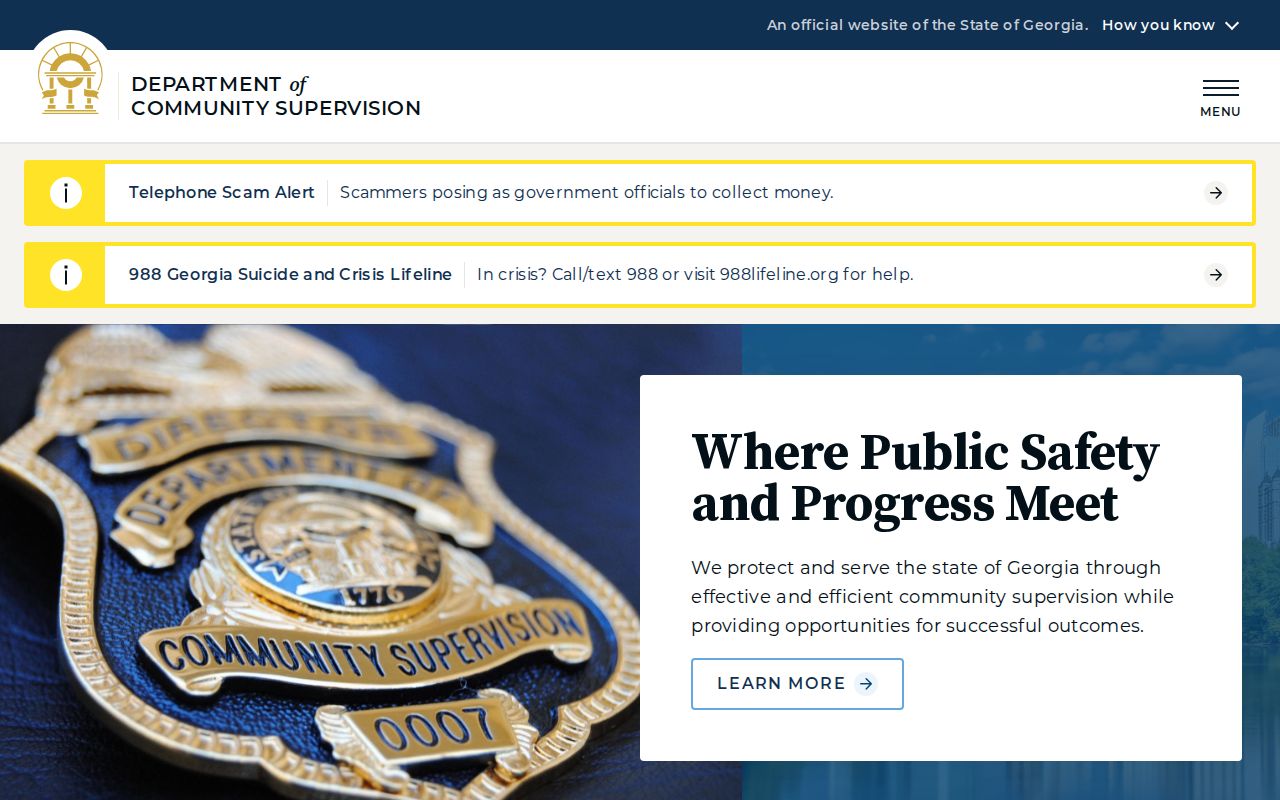
Its role should not be confused with the court that imposed probation or the board that decides parole.
The State Board of Pardons and Paroles is the official release-decision source.
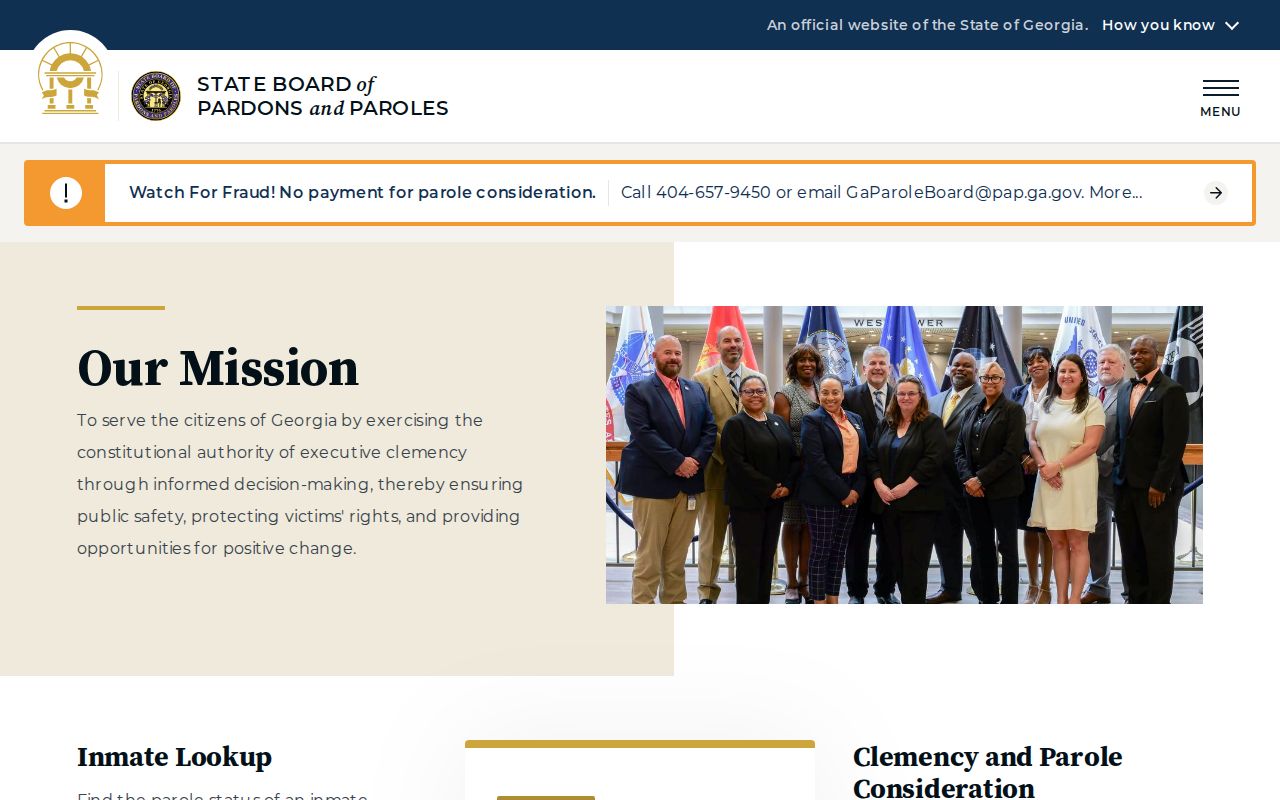
Together, these two official sources explain why supervision and parole decisions appear in different records.
Restricted, Sealed & Expunged Records
Georgia calls its main remedy record restriction. It limits eligible arrest-cycle information from public and private dissemination but does not destroy every agency and court record. Judicial officials and criminal justice agencies retain authorized access. Qualifying outcomes can include dismissal, no grand-jury presentation, nolle prosequi, dead docket, or no record on file. A guilty result normally does not qualify through the basic non-conviction route, though other statutory remedies may apply. First Offender discharge and sealing is a distinct process.
For an arrest before July 1, 2013, the legacy application begins with the arresting agency and moves through the prosecutor. For a later arrest, contact the prosecutor responsible for the case. Before filing, inspect the GCIC history and get a missing final disposition from the Grady court. Georgia's official instructions state that GCIC usually processes a complete approved request in two to three weeks. A denial may be appealed in Superior Court within 30 days.
The GBI's record restriction page provides the current state forms and route.
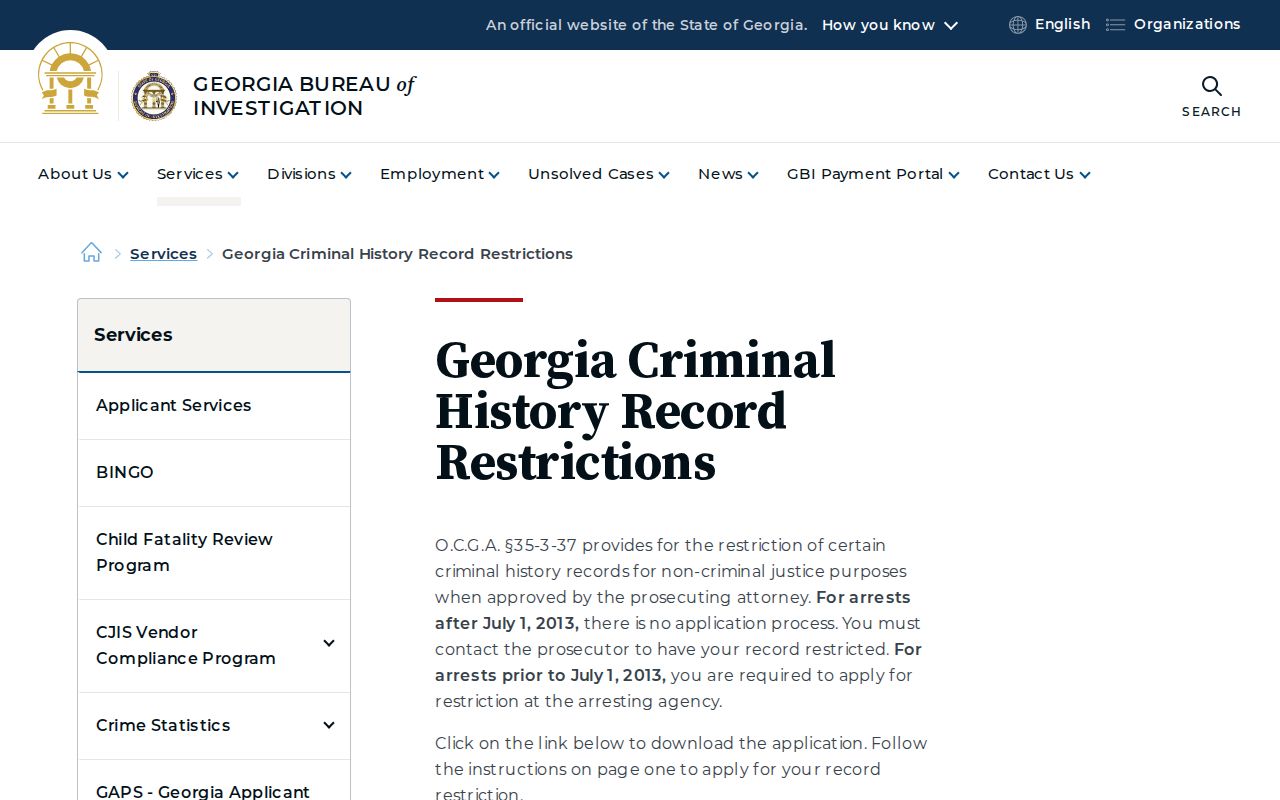
That source should be checked for current processing details before an old Grady arrest is submitted.
Federal Cases Beyond Grady Courts
Grady County lies in the U.S. District Court for the Middle District of Georgia. PACER is the official federal docket and filed-document system after registration, subject to the judiciary's current fees and waiver threshold. Federal criminal files can contain an indictment or information, detention and bond entries, a plea, judgment, and sentence. Those items will not form a complete county court file.
The FBI Identity History Summary is a subject-only fingerprint product. The federal Bureau of Prisons locator covers federal custody and historic federal inmates, not the Grady jail or Georgia Department of Corrections. Check the Middle District of Georgia courthouse directory before planning an in-person federal request.
Note: CourtListener or RECAP may hold donated copies, but PACER and the federal court remain the verification sources.
Reading Grady County Crime Data
Official crime totals belong to a reporting agency and a defined year, not to a broad name search. Use the GBI Crime Statistics tools or the FBI Crime Data Explorer, select the Grady County or city agency, and confirm that all twelve months are present before drawing a conclusion. Cairo Police figures describe that department's reports. They do not automatically include every Sheriff, Whigham Police, Georgia State Patrol, or state-agency event in the county.
Small changes in reporting practice can shift a rural county's rate or a small city's raw count. Record the agency, year, offense category, population coverage, and completeness beside any number. Crime statistics show patterns, not the history of a named person. For an individual event, return to the incident report, booking record, and filed court case.
City-by-City Criminal Records in Grady County
Grady County has two incorporated cities, not three. Cairo Police and Whigham Police keep the narratives their officers create, while a custodial booking usually moves to the county jail. Court routing depends on the filed matter. Cairo Municipal Court handles city and traffic matters within its authority, and Whigham directs Recorder's Court questions through City Hall even when sessions occur at the county courthouse. A city search is therefore one part of the record chain, not the whole record.
Cairo Record Check
County seat and largest city, with police records and a Municipal Court channel.
Whigham Record Check
Police reports begin in Whigham; many booking and court records route to Cairo.
Cairo Police records are available through its records clerk by mail, phone, or email. Whigham Police has no identified online report portal, so its office and phone line are the practical starting points. County and state checks should follow after either city request when the reader needs the filed charge, final outcome, or later custody status.