
Criminal Court Cases in Grady County
Grady Superior Court is the county’s felony trial court and belongs to the South Georgia Judicial Circuit. Indictments, felony pleas, trials, sentences, and eligible restriction appeals belong there. Grady State Court handles misdemeanors and traffic prosecutions. Magistrate Court issues warrants and conducts first appearances and preliminary functions. Cairo Municipal Court and Whigham Recorder’s Court keep their own city ordinance and qualifying traffic or misdemeanor matters. Probate Court is not the normal destination for a criminal case file.
Each court’s clerk keeps its docket and filed papers. That division matters. A jail booking does not tell a reader which charge the prosecutor ultimately filed, while a city citation may never become a Superior Court case. Start with the offense level and arresting agency, then confirm the court. The official Grady County Courts page lists the local offices. The captured county roster shows why one general name search cannot replace a court-specific request.
View the county’s official court roster and contact block.
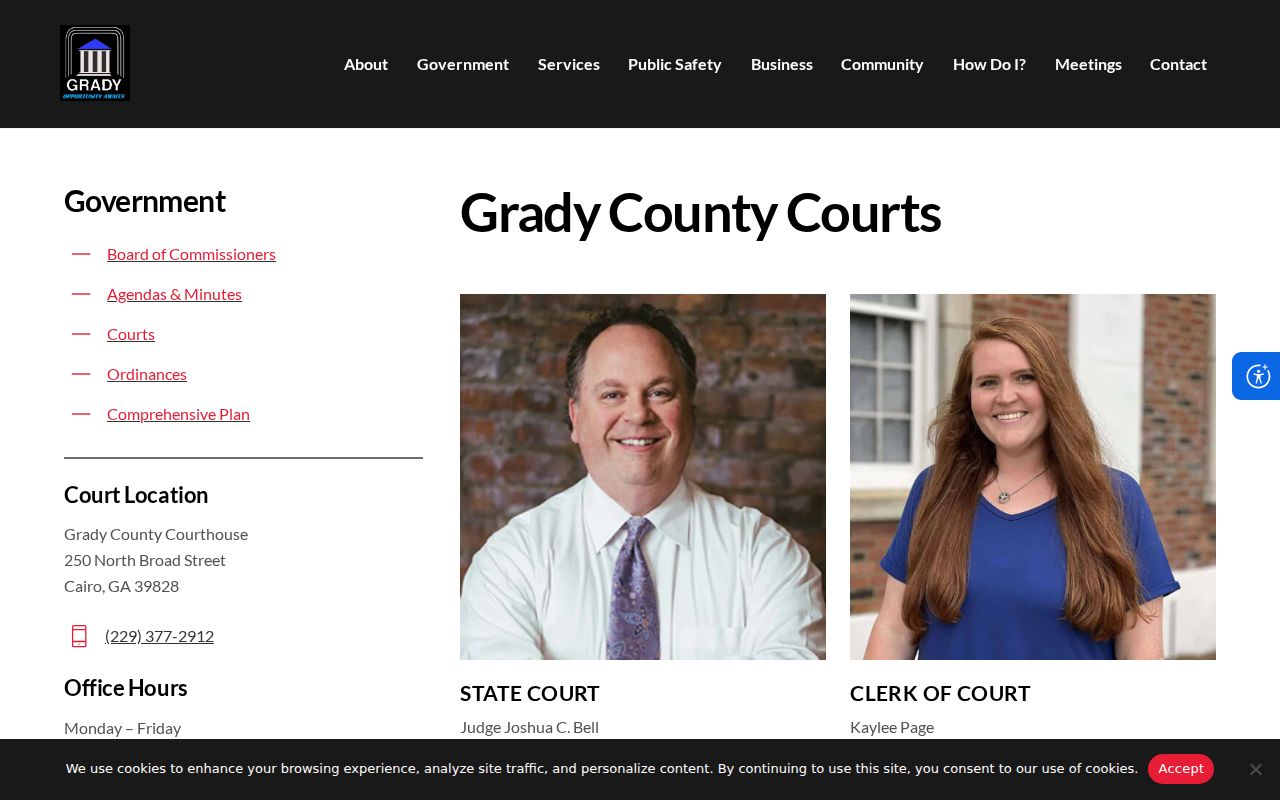
The roster is a useful routing aid, but the named clerk remains the source for a certified disposition or a complete file.
Which Grady Court Holds It?
The charge label provides a first clue, yet it is not always final. A felony arrest may begin in Magistrate Court for a warrant, first appearance, or bond decision before the prosecutor presents the case in Superior Court. A misdemeanor accusation generally proceeds in State Court. City ordinance and qualifying traffic matters can stay with the municipal or recorder’s court. Whigham Recorder’s Court sessions have been announced at the county courthouse, so the hearing place alone does not identify the record custodian.
| Court | Criminal role | Contact |
|---|---|---|
| Grady Superior Court | Felonies, indictments, felony outcomes | 250 N. Broad St.; 229-377-2912 |
| Grady State Court | Misdemeanors and traffic | 229-762-4000; statecourt@gradycountyga.gov |
| Grady Magistrate Court | Warrants and preliminary proceedings | 229-377-4132; magistrate@gradycountyga.gov |
| Whigham Recorder’s Court | City matters | City Hall 229-762-4215 |
The Georgia judiciary also maintains a statewide gateway. Open the Judicial Council of Georgia website to confirm court structure and official access resources.

This gateway supplies statewide context, while Grady’s individual clerks remain responsible for their own files.
Grady County Case Record Searches
The Judicial Council’s E-Access directory routes Grady Superior and State Court searches to PeachCourt. PeachCourt requires registration, and its public landing page does not expose enough of the search form to support claims about exact fields, coverage, free documents, or historical depth. Use the account service as an index, not as a promise that every docket or image is online. The courthouse counter and telephone channel are the sound fallback.
- Identify the likely court from the charge level, arresting agency, citation, or prior notice.
- Use the Judicial Council E-Access directory and follow the Grady provider route.
- Search the account service with the exact party name or known case number and compare the filing court.
- Read the docket status and entries without treating a pending charge as a conviction.
- Call or visit the correct clerk for missing papers, older files, copies, or a certified disposition.
| Search detail | Best use | Limit |
|---|---|---|
| Party name | Locating a possible case | Confirm identity with the clerk |
| Case number | Direct match to a docket | Must match the correct court |
| Filing court | Separating felony, misdemeanor, and city files | Early stages may be in Magistrate Court |
| Filing date or year | Narrowing common names | Online historical coverage is not stated |
Request a Grady Felony File
For a Superior Court felony file, ask the clerk for the docket sheet or register of actions first. It identifies the documents and dates that exist. Then request the accusation or indictment, plea or verdict, final disposition, sentencing order, bond order, and any public warrant return that matters to the question. A certified disposition is the better product when formal proof of the court’s outcome is needed. The courthouse is at 250 North Broad Street in Cairo. The clerk’s number is 229-377-2912, and the published weekday hours are 8:00 a.m. to 5:00 p.m.
Grady Superior Court Clerk
250 North Broad Street
Cairo, GA 39828
229-377-2912
Monday through Friday, 8:00 a.m. to 5:00 p.m.
The Georgia Superior Court Clerks’ Cooperative Authority is another official clerks’ gateway.
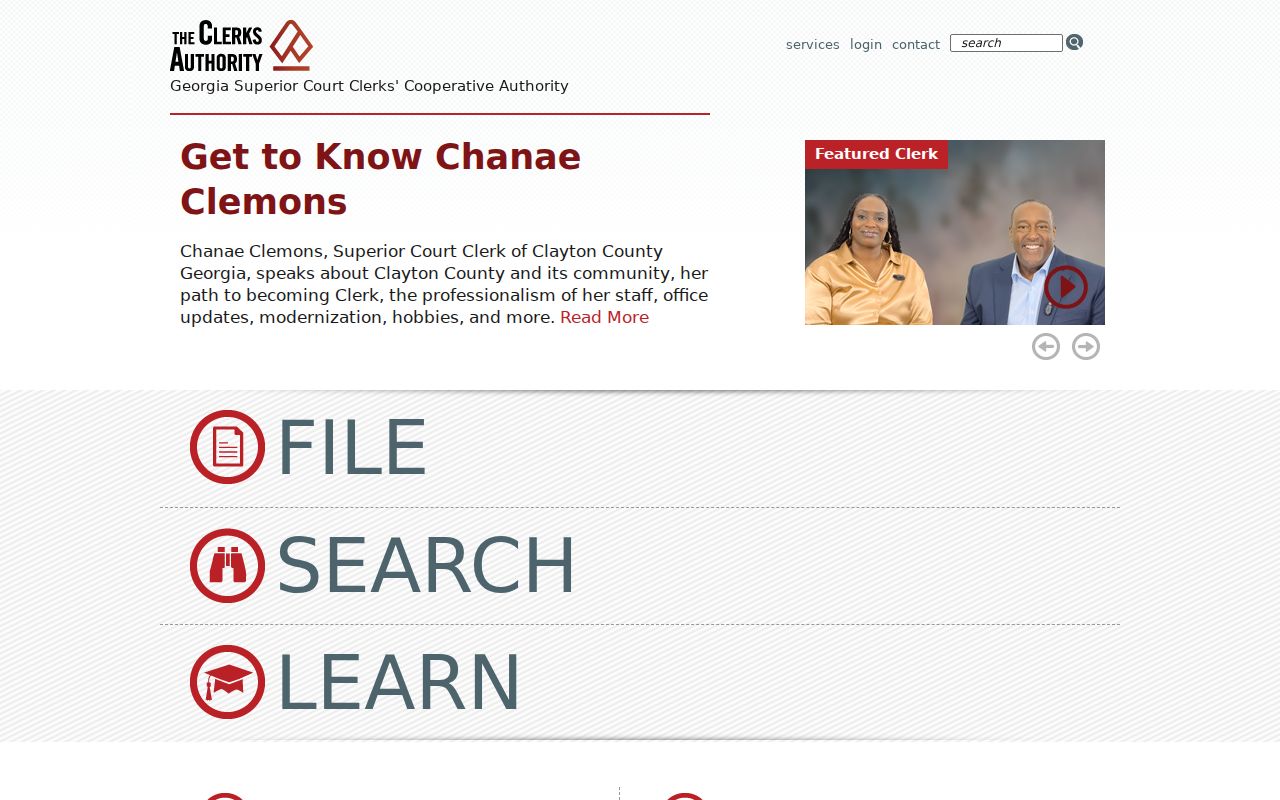
Its statewide services do not displace the Grady clerk’s custody of the local criminal file.
What a Criminal Case File Contains
A court file records what was filed and what the judge or jury decided. Its fields differ from the arresting agency’s narrative and the jail’s intake entry. No official Grady case detail was inspected without selecting a private person, so the inventory below identifies expected clerk fields that must be verified in the actual file. Availability can vary by case, age, sealing order, and document type.
| Case number and court | Identifies the docket and the office responsible for it. |
|---|---|
| Charging document | Shows the accusation or indictment the prosecutor filed, which may differ from booking charges. |
| Docket entries | Chronological notices of filings, hearings, motions, and orders. |
| Hearing details | May list dates, judge, courtroom, counsel, and status. |
| Disposition and judgment | Distinguishes pending, dismissed, acquitted, pleaded, and convicted outcomes. |
| Sentence and conditions | May show confinement, probation, fines, costs, restitution, or concurrent terms. |
A docket entry is often shorthand. Request the signed order when its exact terms matter.
Read Grady Court Outcomes Carefully
Several Georgia terms describe very different results. An accusation is a prosecutor’s formal charging document, often used for misdemeanors and some felonies. An indictment follows a grand jury’s true bill. A nolle prosequi means the prosecutor formally declines to continue a charge. A dead docket makes a matter inactive without a final adjudication. Neither is the same as an acquittal, which is a not-guilty outcome after adjudication.
- Pending
- The court has not entered a final outcome. It is not a conviction.
- Dismissal
- The charge ended without a guilty judgment under the cited order or entry.
- First Offender
- A Georgia disposition that may lead to exoneration and sealing after successful completion; it is not an ordinary conviction.
- Disposition
- The current or final outcome reported for a charge.
A missing GCIC disposition should be checked against the signed Grady court order. The court or prosecutor may need to supply the outcome through the authorized correction process.
Criminal Case Stages in Grady County
A custodial case can begin with arrest and booking, then move to a first appearance and bond decision. The prosecutor reviews the evidence and chooses whether and what to file. A felony may proceed by grand-jury indictment; other matters may use an accusation. Arraignment records the plea. Discovery and motions follow, then a negotiated plea or trial. A verdict and sentence do not end every file because motions, appeals, probation issues, restriction, or sealing may create later entries.
Case flow: Charges Filed › Arraignment › Pretrial › Plea or Trial › Disposition › Sentencing
That sequence also explains why a fresh arrest may not appear at once in the final trial-court docket. The jail and Magistrate Court can hold the first records while the prosecutor’s filing decision is still pending.
Booking Charges Can Change
The initial charge on a Grady booking record reflects the arrest stage. Prosecutors may file different counts after reviewing reports, evidence, and jurisdiction. A court can later dismiss a count, accept a plea to another charge, or enter an acquittal. For that reason, never use the booking label as a substitute for the filed charging document and final disposition.
This cross-check is especially important when an old history lists an arrest but lacks an outcome. The Grady clerk can provide a disposition that helps clarify or correct the statewide record.
Federal Cases Use PACER
Grady County lies in the U.S. District Court for the Middle District of Georgia. A federal indictment, detention order, plea, judgment, or sentence belongs in that federal docket, not at the Grady Superior Court counter. PACER requires registration and applies the federal judiciary’s current fee schedule and quarterly waiver rules. CourtListener or RECAP may hold donated copies, but neither is the official source.
Visit the official PACER records gateway for federal docket access.
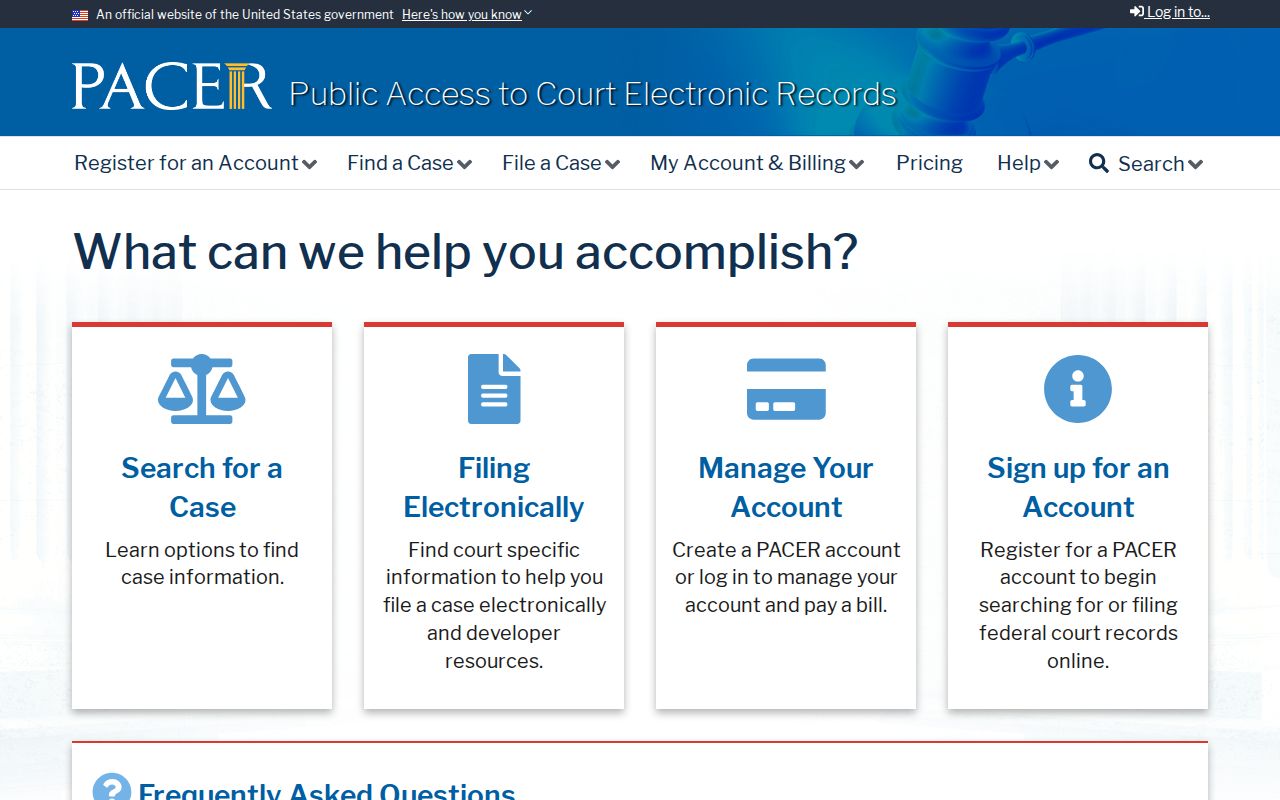
PACER separates federal records from county and Georgia trial-court files.
The district court’s own site helps identify the proper office. Consult the Middle District of Georgia court website before planning a visit.
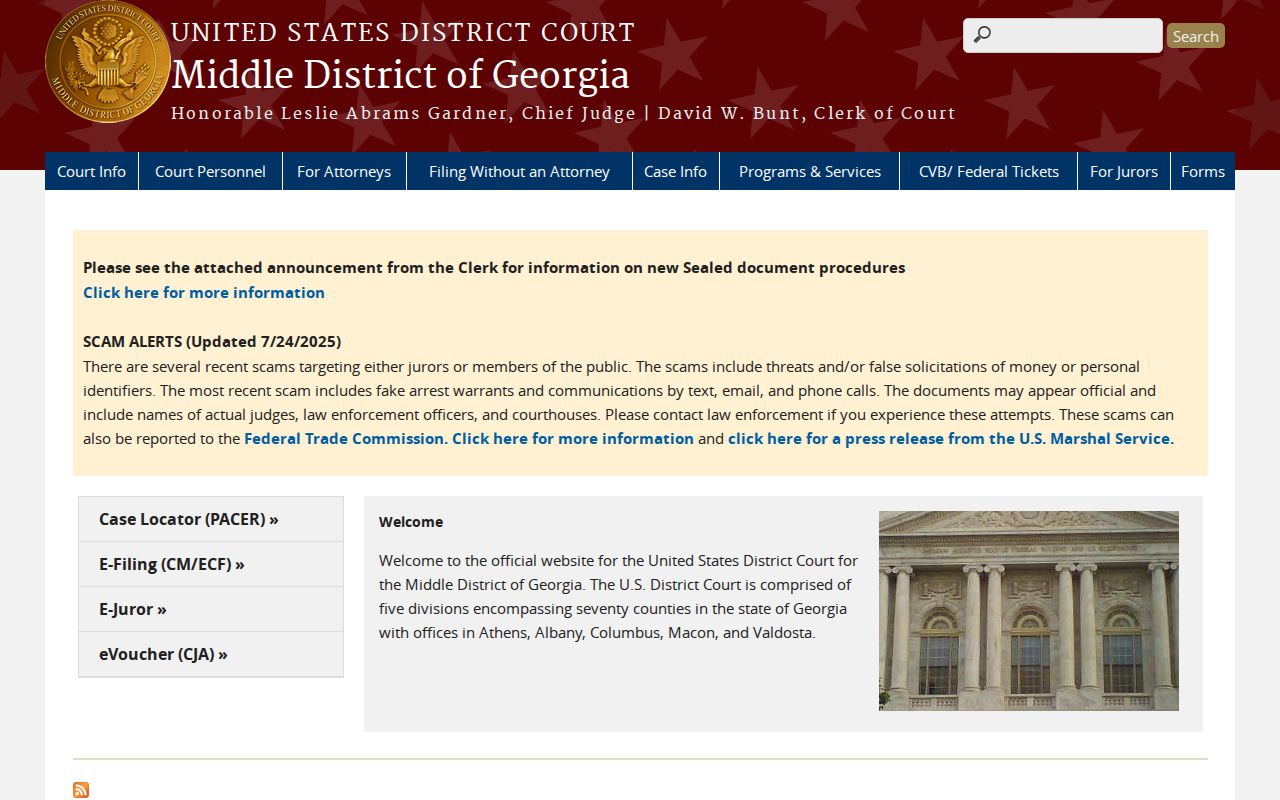
The federal courthouse directory is authoritative for divisional contact information, while PACER holds the docket.
Access Rules for Case Records
Uniform Superior Court Rule 21 supports public inspection unless a law or court order limits access. A limiting order must identify the protected portion, the nature and duration of the limit, and the reason. Rules 36.16 and 36.17 require protected identifiers to be omitted or redacted. Thus, a public docket can remain open while Social Security numbers, financial-account data, victim information, juvenile material, or other protected details stay hidden.
The Georgia Open Records Act is a fallback for existing nonexempt agency records, but the court clerk is the direct custodian for a court file. An agency need not create a new report to answer a question, and lawful search or copying costs may apply. If a case does not appear online, contact the clerk rather than assuming it was sealed or never existed. Ask whether the file is older, indexed differently, held by another court, restricted, or available only at the counter.
Record restriction under O.C.G.A. § 35-3-37 and court-record sealing are related but distinct. Restriction does not erase every record. First Offender sealing also follows its own rules. Verify the exact order and public status with the court that entered it.