
Cairo Criminal History Checks
The best starting office depends on the question. Cairo Police holds its incident and arrest narratives. The City Clerk routes Municipal Court records. Grady County Jail maintains a custodial booking, while the Superior Court Clerk and State Court hold the filed criminal case. Georgia's repository is a later statewide layer, not a substitute for those local records.
- Ask Cairo Police for the city incident or arrest report, using the case number and date when known.
- Contact the City Clerk for Cairo Municipal Court traffic and ordinance records.
- Call Grady County Jail for a recent booking or current custody question.
- Use the Grady Clerk for a felony file and State Court for a misdemeanor file.
- For one's own statewide history, ask a participating law-enforcement agency about the current GCIC process.
A report, booking, court file, and GCIC history answer different questions. The most reliable Cairo search follows the event from the creating agency to the court that resolved it.
Cairo Reports and County Bookings
A Cairo Police arrest can create two immediate records. The department writes the narrative about the stop, investigation, alleged offense, and arrest. If the person enters custody, the Grady detention system creates an intake record with the booking time, initial charge, arresting agency, bond, and custody data. The city report does not become a county report just because the jail accepts the person.
This split often trips up searchers. Call Cairo Police for what officers wrote. Call the Grady Sheriff or jail at 229-377-5200 for the booking. Neither record proves guilt, and the initial wording may differ from the accusation or indictment later filed in court.
Records at the Cairo Police Department
Cairo Police accepts report requests from its records channel at 55 3rd Avenue NW, Cairo, GA 39828. The contact is 229-378-3096 extension 173 or information@cairopd.com, Monday through Friday from 8:00 a.m. to 5:00 p.m. The city says reports are usually ready within two business days. Requests may be sent by mail, phone, or email.
Give the case number when available. Otherwise, supply the date range, name, and type of record. Ask for a specific incident or arrest report, not every record about a broad topic. The city's police reports page and open-records instructions are the official starting points.
Cairo Police Records
55 3rd Avenue NW
Cairo, GA 39828
229-378-3096 ext. 173
information@cairopd.com
Monday-Friday, 8:00-5:00
Ask whether any part is withheld or redacted if the report involves an active investigation, a juvenile, protected victim information, medical data, or security material.
Cairo Police Record Costs
Cairo publishes a detailed cost rule for police open-records work. The first fifteen minutes of staff time are free. Qualified staff time is currently listed at $19.54 per hour after that allowance. If the estimate exceeds $25, the city requires approval before it proceeds.
| Item | Published cost |
|---|---|
| Black-and-white page | $0.10 per page |
| DVD | $5 |
| Jump drive | $8 |
| Body-camera or car-camera copy | $10 |
| Certified copy | $5 |
| Postage | Actual cost |
A narrow request helps the records custodian locate responsive files and can limit search time. Ask for an estimate before approving broad video, long time spans, or many reports.
Booking and Arrest Records in Cairo
Cairo does not publish a separate city jail roster in the research reviewed. A custodial arrest ordinarily moves into the Grady County detention system. For a recent booking, call 229-377-5200 and ask about current custody, the booking identifier, initial charges, bond, and issuing court. Confirm the right entrance before traveling because official pages list different operational and jail addresses.
A Cairo arrest can then branch by charge. City ordinance and qualifying traffic matters may remain with Municipal Court. Misdemeanors can proceed in Grady State Court. Felonies belong in Superior Court. The prosecutor may amend, decline, or replace the officer's first charge, so the filed court document is the better record of the prosecution.
For deeper county-wide booking and arrest channels, use the Grady County arrest search. The city police narrative remains a separate request even after a county booking appears.
Verify Cairo Charges at Court
When the police report and booking use one charge but a later record uses another, contact the court custodian. A felony file routes to the Grady Superior Court Clerk at 229-377-2912. A misdemeanor file routes to State Court at 229-762-4000. Give the full name, approximate filing year, and case number if known.
The court file can include an accusation or indictment, docket entries, pleas, motions, disposition, sentence, bond, and costs. Ask for a certified disposition when the final outcome matters. Cairo Police cannot certify what the court ultimately decided, and GCIC may receive the disposition after the clerk enters it.
Georgia terms can mark very different outcomes. An accusation is a prosecutor-filed charging paper often used for misdemeanors and permitted felonies. An indictment is returned by a grand jury. A nolle prosequi means the prosecutor formally stopped pursuing a charge at that time, while a dismissal ends that charge without a conviction. A dead docket is inactive placement, not an acquittal. Ask the Cairo-area court clerk for the actual disposition document rather than inferring an outcome from one docket label.
The Cairo Municipal Court File
Cairo Municipal Court handles traffic violations issued inside the city and city-ordinance matters within its jurisdiction. No online city case lookup was found. Records route through the City Clerk at 119 N Broad Street, P.O. Box 29, Cairo, GA 39828. Call 229-377-1722 extension 113 or email dbarfield@cairocity.net. The office is open Monday through Thursday from 7:00 a.m. to 5:30 p.m. and closed Friday.
| Court | Cairo Municipal Court, with record routing through the City Clerk. |
|---|---|
| Case types | City ordinance cases and traffic violations issued within Cairo. |
| Lookup channel | Clerk counter, phone, email, mail, or a focused records request; no online docket was found. |
| File contents | Citation or charge, docket events, hearing data, plea, judgment, sentence, and financial entries as applicable. |
| Copies and fees | Ask the City Clerk for the current amount and available format because a court-copy schedule was not published in the research. |
Do not send a felony request to the city clerk. Municipal jurisdiction is limited, while Grady Superior Court handles felony prosecutions and State Court handles county misdemeanors.
Cairo Court and City Marshal
Cairo created a City Marshal position within the Police Department in June 2025. The marshal serves Municipal Court summonses, citations, and legal papers and enforces city ordinances. That work can generate police, service, citation, and Municipal Court records, but the holding office still depends on the document.
A March 2026 council proposal sought to expand locally enforceable misdemeanor ordinances. The stated aim was to let qualifying recurring conduct be cited and resolved locally instead of requiring officers to leave patrol and seek State Court warrants. For a searcher, the key is to identify whether a matter became a Cairo ordinance case or a county prosecution.
How Cairo Records Reach the County
Cairo is the county seat, so city and county offices are close, but their files remain separate. Police create the incident record. A custodial arrest produces a county booking. A prosecutor chooses the filed charge, and the correct clerk maintains the case. Final dispositions are then reported through Georgia's criminal-justice network to GCIC.
Record flow: Cairo Police › Grady County Courts › Georgia Bureau of Investigation and Georgia Crime Information Center
Recent facts are often clearest at the creating office. The city report explains the incident, while the jail gives custody status. An older, resolved matter is best checked at court and, for one's own statewide review, through an official GCIC channel. A Georgia Felon Search result is limited to public final-felony conviction data and is not a full Cairo rap sheet.
Cairo's County-Seat Records Hub
Cairo has served as Grady County's seat since the county's early years. The first courthouse was built in 1908 and burned in 1980; the current courthouse dates from the early 1980s. Today the central court address is 250 North Broad Street. The Clerk's number is 229-377-2912, and published hours are Monday through Friday, 8:00 a.m. to 5:00 p.m.
That location ties Cairo to records for the whole county. It does not turn a City Police report into a clerk record. Call before travel, ask which counter has the file, and request accommodation information when needed. No county-published parking, phone, locker, or screening policy was found.
The same address appears in official material for the Grady County Jail, while the Sheriff publishes an operational address at 115 16th Avenue NE. That is a routing clue, not proof that every public counter shares one entrance. A Cairo resident seeking a court copy should call the Clerk. Someone seeking a booking or police report should call the jail or the city department first. Confirming the holder and entrance can prevent a wasted trip between offices that sit in the same city.
Reading Cairo Crime Record Data
The GBI crime-statistics program routes readers to official reported data. Use the Cairo Police agency filter, select a year, and check whether the report covers all twelve months before comparing totals.
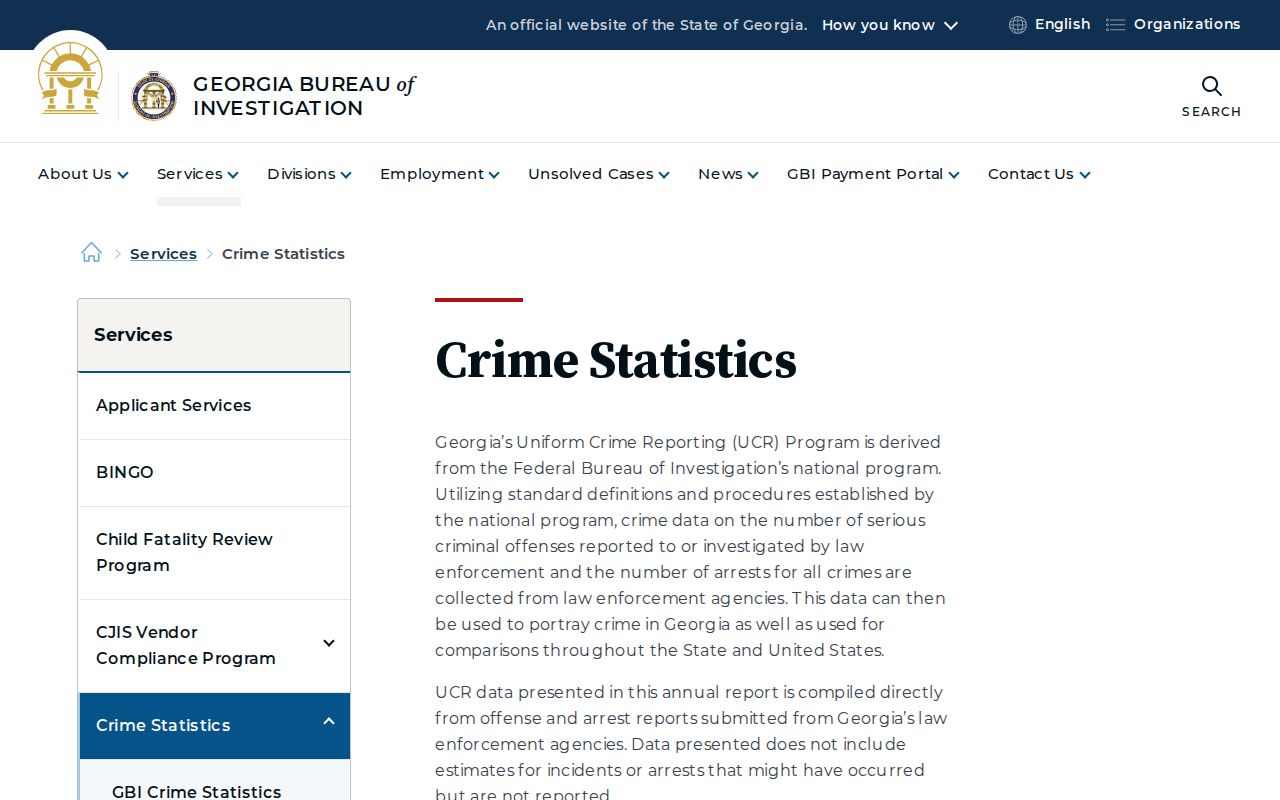
The state page is a gateway to counts and trends, not a source for a named person's police or court record.
The FBI Crime Data Explorer provides another official agency-level view.

Reporting changes and incomplete months can move totals. Use crime data for city context, not to infer that any resident committed an offense.
Cairo Record Access Rules
The Georgia Open Records Act applies to existing nonexempt records held by Cairo agencies. A request should reasonably describe the record by date, place, incident number, agency, and desired format. The city generally must respond within three business days by producing accessible records or stating when they will be available and identifying a lawful basis for withholding. That is a response rule, not a promise that every large request will be finished in three days.
Key statutes:
O.C.G.A. §§ 50-18-70 through 50-18-77 create Georgia's public-record presumption and response process, subject to exemptions.
O.C.G.A. §§ 35-3-34 and 35-3-35 govern GCIC criminal-history dissemination and controlled noncriminal-justice access.
O.C.G.A. § 35-3-37 governs Georgia record restriction and prosecutor approval.
Active investigative matter, juvenile data, confidential victim details, medical data, social-security numbers, and protected security information may be withheld or redacted. Ask the actual custodian for an existing record rather than asking an office to create a new analysis.
A useful Cairo request states whether the reader wants an incident narrative, citation, Municipal Court entry, video, or certified copy. It gives a short date range and a case or incident number when available. It also names the preferred electronic or paper format and asks for a cost estimate above a set amount. Those details help the city distinguish a police file from a court file without forcing staff to guess at the intended record.